
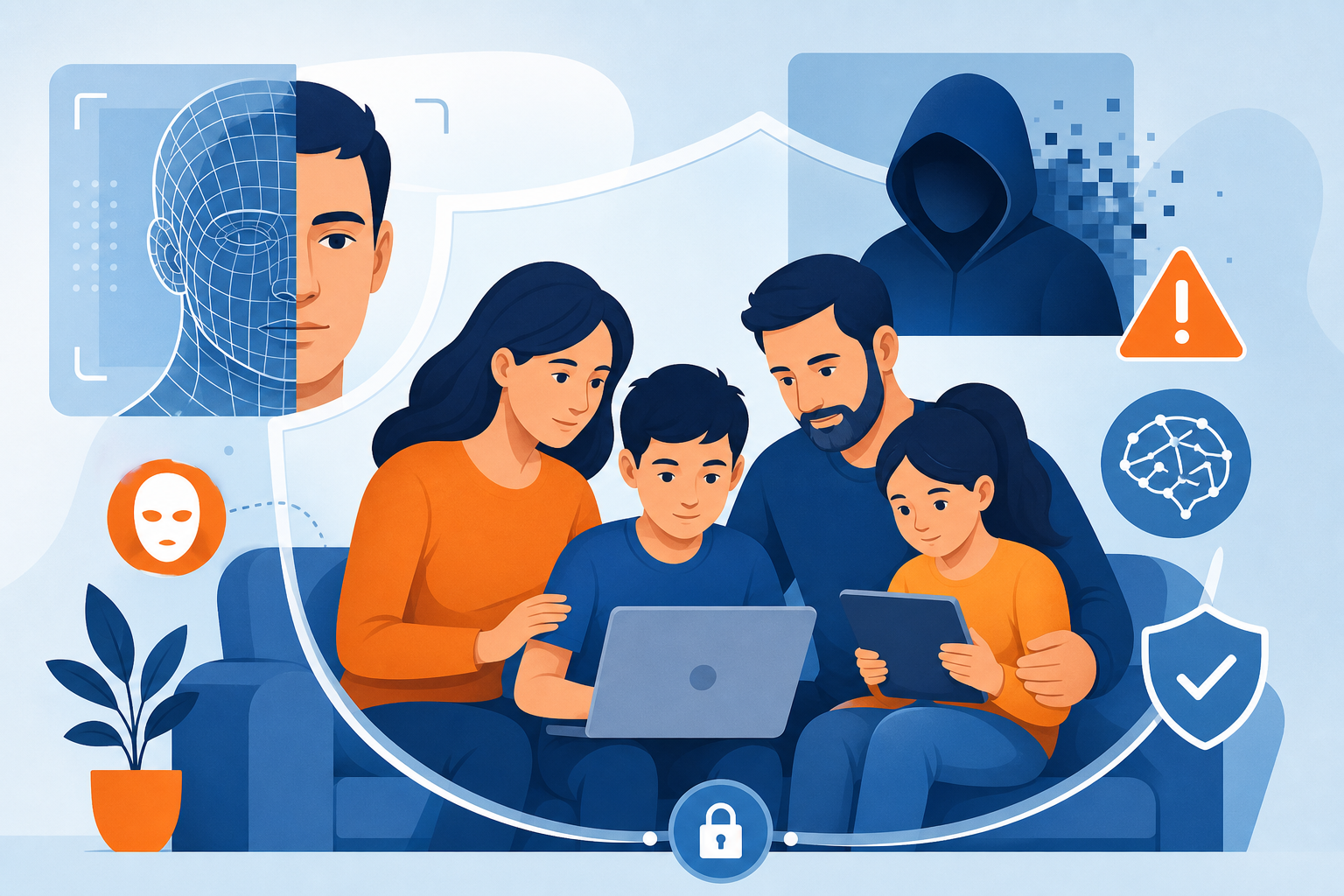
Artificial intelligence has quietly changed the rules of online safety. What used to be obvious scams full of typos and blurry photos are now polished, personalized, and disturbingly convincing. In 2026, your child could receive a video call that looks and sounds exactly like a friend, or an email that mimics their school with perfect accuracy. As a parent, you don’t need to become a cybersecurity expert overnight, but you do need a clear, practical understanding of how deepfakes and AI scams work and how to protect your family.
This guide breaks down the real risks, the warning signs, and the concrete steps you can take today to build strong online safety for parents and children alike.
What Are Deepfakes and Why Should Parents Care?
A deepfake is synthetic media, usually video, audio, or images, created by AI to imitate a real person. The technology analyzes existing footage or voice recordings and generates new content that appears authentic. A few years ago, making a convincing deepfake required technical skill and expensive software. Today, free apps and cheap online tools can clone a voice from just a few seconds of audio.
Why does this matter for families? Because children and teenagers share enormous amounts of personal media online. A public video on social media provides everything a scammer needs to imitate your child’s voice or face. Common threats include:
- Voice cloning scams: A caller uses a cloned voice of a family member claiming to be in trouble and needing money urgently.
- Fake video calls: Scammers impersonate a trusted contact to extract information or images.
- Manipulated images: A child’s face is placed into embarrassing or explicit content used for bullying or blackmail.
- Impersonation of authority figures: Fake messages that appear to come from teachers, coaches, or school administrators.
How AI Scams Target Families in 2026
AI has made scams faster, cheaper, and far more personalized. Instead of sending generic messages to thousands of people, criminals now use AI to research their targets and craft tailored attacks. Here are the most common tactics you should recognize.
The Emergency Call Scam
This is one of the most emotionally manipulative attacks. A parent or grandparent receives a phone call with what sounds like their child’s voice, crying and saying they’ve been in an accident or arrested. A second voice then demands immediate payment. The urgency and the familiar voice are designed to override rational thinking. Always remember: real emergencies rarely require instant, secret payments through gift cards or wire transfers.
AI-Powered Phishing
Traditional phishing emails were easy to spot. Modern AI writes flawless messages that reference real details about your child’s school, activities, or friends. A teenager might receive a message that appears to come from a gaming platform, streaming service, or even a classmate, asking them to click a link or share a password.
Romance and Friendship Manipulation
Older teens are increasingly targeted through fake online relationships. Scammers use AI-generated profile photos and chatbots to build trust over weeks before requesting money, personal images, or financial information.
Fake Job and Scholarship Offers
Students eager for income or educational funding are lured by AI-generated offers that look professional and legitimate. These often request an upfront fee, bank details, or a copy of an identity document.
Warning Signs Every Parent Should Know
Deepfakes and AI scams are convincing, but they still leave clues. Teach your family to pause and look for these signals:
- Urgency and secrecy: Any message demanding immediate action or telling you to keep a secret is a major red flag.
- Unusual payment requests: Gift cards, cryptocurrency, or wire transfers are favorites among scammers because they are hard to trace.
- Visual glitches: In deepfake videos, look for unnatural blinking, mismatched lighting, blurry edges around the face, or lips that don’t quite sync with the audio.
- Audio inconsistencies: Cloned voices may sound slightly robotic, have odd pauses, or lack natural background noise.
- Requests that break normal patterns: A friend suddenly asking for money or a school asking for passwords should always be verified.
Practical Steps to Protect Your Family
Knowledge is only useful when it turns into action. The following steps are realistic for any household and make a genuine difference.
1. Create a Family Code Word
Agree on a private word or phrase that only your family knows. If anyone calls claiming to be a family member in an emergency, ask for the code word. A scammer using a cloned voice will not know it. This simple habit defeats even the most advanced voice-cloning attacks.
2. Verify Before You Trust
Teach your children the habit of hanging up and calling back on a known number. If a message or call feels off, contact the person directly through a channel you already trust. Never rely on the phone number or link provided in a suspicious message.
3. Lock Down Social Media
Review privacy settings together and set accounts to private. The less public video and audio your child shares, the less material scammers have to clone. Discuss why posting long videos of themselves talking can create risk, without shaming them for using the platforms they enjoy.
4. Use Strong, Unique Passwords and Two-Factor Authentication
A password manager helps everyone in the family use unique, complex passwords. Enabling two-factor authentication on important accounts adds a critical extra layer, so even a stolen password isn’t enough for an attacker to get in.
5. Talk Openly and Often
The single most powerful protection is an ongoing conversation. Children who feel they can tell a parent about a strange message, an embarrassing image, or a mistake are far safer than those afraid of punishment. Make it clear that they will never be in trouble for reporting a scam, even if they already clicked a link or sent money.
Building Long-Term Digital Resilience
Technology will keep evolving, so the goal isn’t to memorize today’s specific scams but to build lasting critical-thinking skills. Encourage your family to approach online content with healthy skepticism. A good rule of thumb: if something triggers a strong emotion, whether fear, excitement, or urgency, that’s exactly the moment to slow down and verify.
Consider practicing together. Show your children examples of deepfake videos available in news reports, and discuss what looks off. Role-play an emergency scam call so they know how to respond calmly. These small exercises turn abstract warnings into confident, practiced behavior.
It’s also worth reviewing your family’s digital habits every few months. New apps, new accounts, and new friendships all change your exposure. A short family check-in on privacy settings and recent suspicious messages keeps everyone alert without creating fear.
The Bottom Line
Deepfakes and AI scams are genuinely more sophisticated than the threats of just a few years ago, but they rely on the same human weaknesses: trust, fear, and urgency. By combining smart technical habits with open communication, you give your family the tools to recognize manipulation and respond wisely. Strong online safety for parents isn’t about fear, it’s about preparation. Start with a family code word today, keep the conversation going, and you’ll be far ahead of the scammers counting on your surprise.


