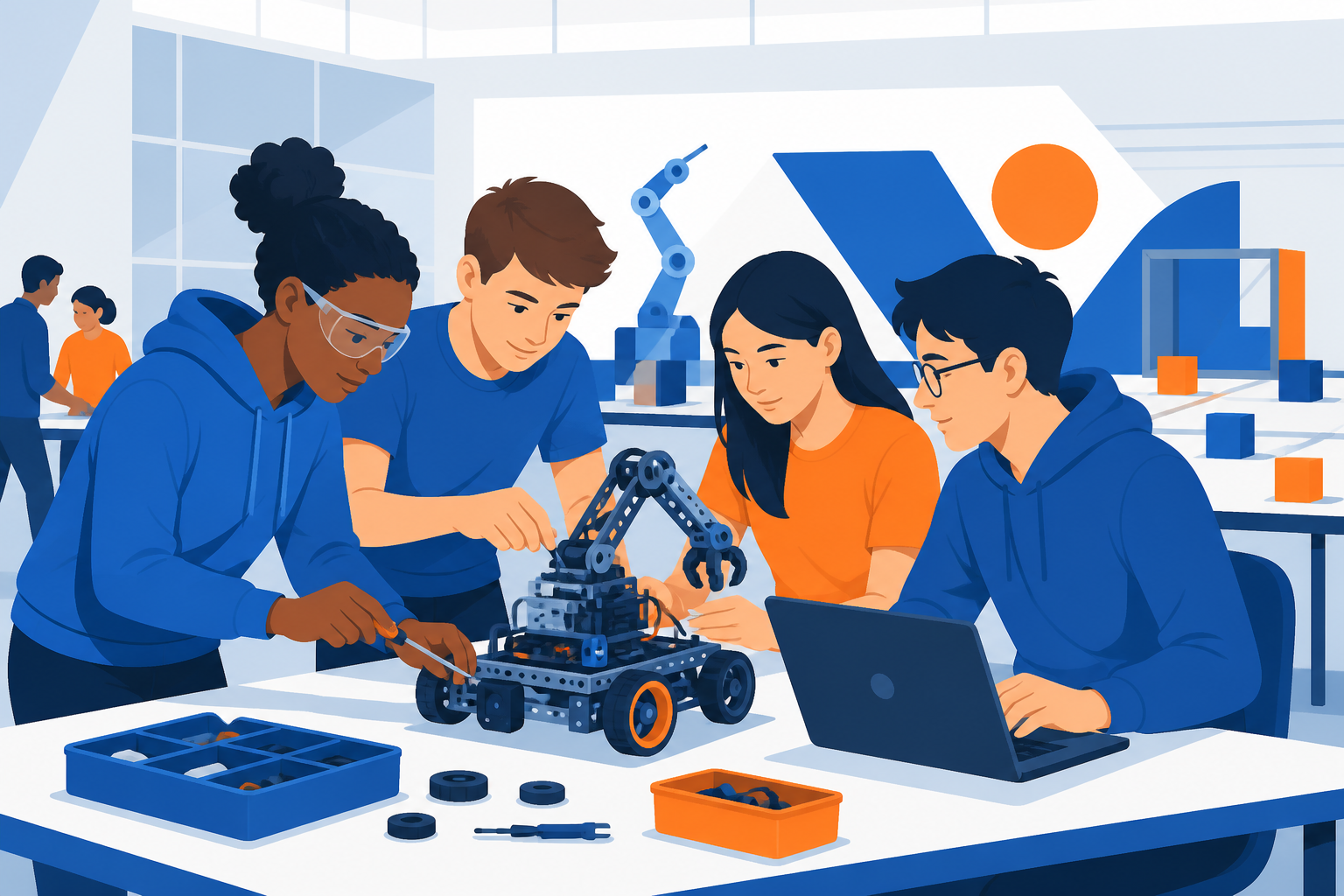
There is a moment in every hackathon that separates it from a regular classroom assignment. It usually happens around hour six, when a team’s original idea has collapsed, the code will not compile, and the clock keeps ticking. Somewhere in that pressure, students discover something surprising: they can figure it out. That feeling—earned, not given—is exactly why STEAM hackathons for students have become one of the most powerful confidence-building experiences in modern education.
The best part? You do not need to win to walk away transformed. In fact, the students who lose often gain the most. Let’s break down why competing matters, what it actually teaches, and how you can help a young person get started.
What Makes a Hackathon Different From Homework
A hackathon is a time-boxed event where participants build a working project—an app, a robot, a prototype, a data model—usually over one to two days. A STEAM challenge broadens that idea to include Science, Technology, Engineering, Arts, and Mathematics, so a project might combine coding with design, storytelling, or environmental research.
Unlike a typical assignment, there is no single correct answer and no teacher walking you through the steps. Students define the problem, choose the tools, and defend their decisions in front of judges. This shift from following instructions to owning outcomes is where real growth begins.
The pressure is the point
Constraints force creativity. When a team has only 24 hours and a laptop, they cannot afford to overthink. They learn to prototype quickly, test ideas, and abandon what is not working. That rhythm—build, test, adjust—mirrors how professionals actually solve problems in engineering, startups, and research labs.
Building Confidence Through STEAM Challenges: The Hidden Curriculum
Ask any hackathon veteran what they remember, and they rarely mention the trophy. They talk about the moment their prototype finally worked, or the teammate who helped them debug at midnight. Building confidence through STEAM challenges happens because students experience competence in real time, not as an abstract grade weeks later.
Here is what that confidence is actually made of:
- Proof of capability. Shipping something that works, even if imperfect, is undeniable evidence that a student can create, not just consume.
- Comfort with uncertainty. Nobody hands you a rubric mid-hackathon. Learning to move forward without perfect information is a skill that transfers to college, careers, and life.
- Public speaking under pressure. Presenting a project to judges builds a kind of poise that classroom presentations rarely match.
- Resilience. When code breaks or a plan fails, students learn that setbacks are steps, not endings.
Why Losing Teaches More Than Winning
This is the counterintuitive heart of the matter. Trophies feel great, but they can also create a fragile kind of motivation—do it for the reward. Students who do not place learn a more durable lesson: the value was in the doing.
Consider a team that spent a weekend building an app to help elderly neighbors track medications. They did not win, but they discovered they enjoyed interviewing users, sketching interfaces, and testing ideas. That team walked away with a portfolio project, a clearer sense of their interests, and the knowledge that they could build something real. Compare that to a student who wins a spelling bee by memorizing lists—useful, but rarely life-changing.
Reframing the scoreboard
Help students measure success by what they can now do that they could not do before. Ask them:
- What did you build that you are proud of?
- What broke, and how did you respond?
- What would you try differently next time?
- What did you learn about working with a team?
These questions turn any result into growth. A student who reflects on a loss is often better prepared for the next challenge than one who coasted to a win.
How to Get Started With Student Competitions
You do not need to be a prodigy to join. Most student competitions welcome beginners and organize teams by experience level. Here is a practical roadmap.
1. Start small and local
Look for school clubs, library events, or regional STEAM fairs before jumping into a national competition. Local events tend to be lower pressure and more welcoming, which makes the first experience positive. Many online platforms also run beginner-friendly virtual hackathons you can join from home.
2. Build a balanced team
The strongest teams mix skills. You need someone who codes, someone who designs, someone who researches, and someone who can present clearly. A student who cannot program can still be invaluable as the person who understands the problem and tells the story. Encourage young people to see that every role matters.
3. Learn one tool before you arrive
Confidence grows when you have at least one reliable skill. That might be a beginner coding language, a design app, a spreadsheet for data, or a presentation tool. You do not need to master everything—just show up with one thing you can contribute.
4. Focus on a real problem
Judges and, more importantly, learning outcomes both improve when a project solves something that matters. Encourage students to notice frustrations in their own lives—a confusing bus schedule, food waste at school, a grandparent who struggles with a phone—and build for those. Real problems create real motivation.
Advice for Parents and Teachers
Adults play a quiet but critical role. The goal is to support without taking over. Here is how to help.
- Protect the struggle. Resist the urge to fix everything. The frustration of being stuck is where learning lives. Offer encouragement, not answers.
- Normalize failure early. Tell students before the event that most projects will be messy and unfinished—and that this is completely normal. Removing the fear of imperfection frees them to take risks.
- Celebrate effort and process. After the event, praise specific decisions and improvements rather than only the final result.
- Connect it forward. Help students save their projects, reflections, and photos. These become powerful additions to college applications, portfolios, and resumes.
The Long-Term Payoff
The skills built at a hackathon compound over time. A student who learns to prototype quickly becomes an adult who can turn ideas into action. One who learns to present under pressure becomes a professional who can pitch, lead, and persuade. And a young person who discovers they can recover from failure carries that resilience into every future challenge, from exams to job interviews to launching a business.
These events also open doors socially. Students meet peers who share their curiosity, mentors who can guide them, and sometimes even the collaborators for future projects. For many, a single hackathon is the spark that turns a casual interest in technology or design into a genuine passion.
Compete for the Growth, Not the Medal
The measure of a great STEAM challenge is not who took home the prize. It is the student who now believes they can build, create, and solve—because they just proved it to themselves. Whether the result is first place or a project that never quite worked, the confidence is real and it lasts.
So find an event, gather a team, pick a problem worth solving, and dive in. Win or lose, your student will come out stronger. And that, far more than any trophy, is the point of showing up.