
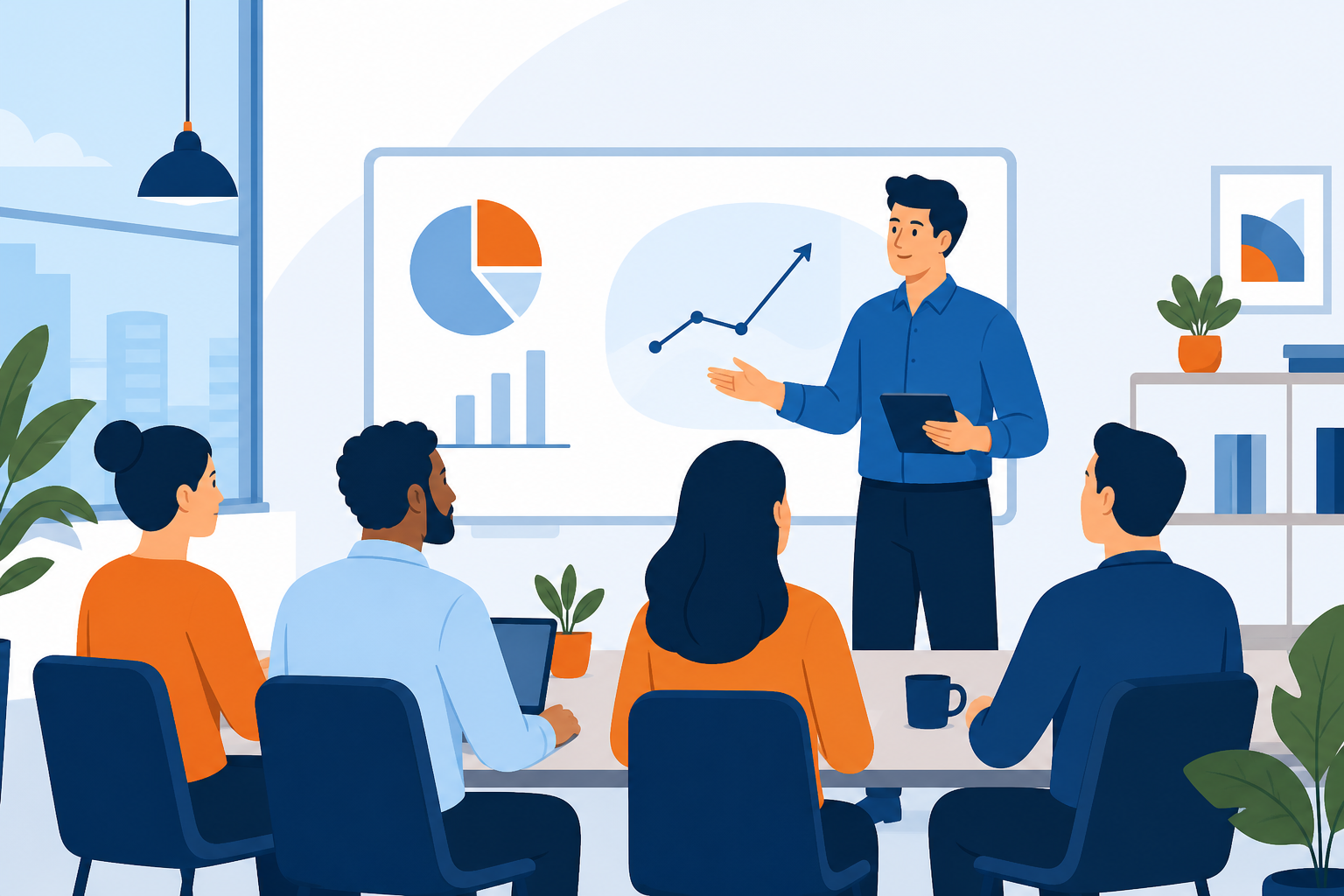
Small businesses face a paradox. You need to compete with larger companies that have deeper pockets and bigger teams, yet you rarely have the budget to hire specialists for every emerging skill. The solution most successful owners land on is not hiring more people, but developing the people they already have. Upskilling small business teams in areas like STEAM and artificial intelligence is one of the highest-return investments you can make, and it is far more accessible than most owners assume.
In this article, we will break down why STEAM training for employees and AI training for small business deliver measurable payoffs, and give you a practical roadmap for getting started without derailing your daily operations.
Why Upskilling Matters More Than Ever for Small Businesses
The pace of change in technology has compressed the shelf life of professional skills. A tool that gave you an edge two years ago may already be standard, and the tools your competitors are adopting today could reshape your market by next quarter. For a small business, falling behind is not just an inconvenience. It can mean losing customers to a competitor who responds faster, prices smarter, or markets more effectively.
Upskilling addresses this directly. Instead of chasing new hires in a tight labor market, you strengthen the capabilities of a team that already understands your customers, your products, and your culture. That institutional knowledge is difficult to replace and easy to build on. When you pair it with modern skills, you create a workforce that is both loyal and future-ready.
What STEAM Training Actually Covers
STEAM stands for Science, Technology, Engineering, Arts, and Mathematics. For a small business, the value is not in turning your staff into engineers. It is in cultivating a way of thinking that blends analytical rigor with creativity. STEAM training for employees builds several practical muscles:
- Data literacy: Reading a sales report and spotting a trend, or understanding which marketing channel actually drives revenue.
- Structured problem solving: Breaking a messy operational issue into testable steps rather than guessing.
- Design thinking: Approaching customer experience and product decisions from the user’s point of view.
- Basic technical fluency: Feeling comfortable adopting new software, automating repetitive tasks, and troubleshooting common issues.
Consider a small retail shop. A team trained to read inventory data can identify slow-moving stock before it ties up cash, while a team fluent in design thinking can redesign the store layout to lift average basket size. Neither requires a computer science degree, and both drive real profit.
Why AI Training Is No Longer Optional
Artificial intelligence has moved from a futuristic buzzword to an everyday tool. Chat assistants draft emails, image generators produce marketing visuals, and predictive tools forecast demand. The businesses that thrive are not necessarily the ones with the most advanced AI, but the ones whose teams know how to use accessible tools well.
AI training for small business should focus on practical application rather than theory. Your team does not need to build models. They need to know how to prompt tools effectively, verify the output, and integrate AI into existing workflows responsibly. Concrete examples include:
- Using an AI assistant to draft and personalize customer follow-up emails in a fraction of the time.
- Summarizing long supplier contracts or customer feedback to surface key points quickly.
- Generating first drafts of social media content that a human then refines to match your brand voice.
- Analyzing customer service transcripts to identify the most common complaints.
Just as important is teaching your team the limits of these tools. AI can produce confident but incorrect answers, and it can raise privacy concerns if used carelessly with customer data. Training that includes responsible use protects your reputation while unlocking productivity.
The Return on Investment
Owners rightly ask whether training pays for itself. The evidence, both from research and from countless small business case studies, points to a clear yes. Here is where the return shows up:
1. Productivity Gains
When an employee learns to automate a two-hour weekly task, that is roughly 100 hours reclaimed per year. Multiply that across a team and across multiple tasks, and the time savings quickly outweigh the cost of training. Those recovered hours can go toward customer relationships, product development, or growth.
2. Reduced Turnover
Employees who feel their employer invests in their growth are significantly more likely to stay. For a small business, replacing a single skilled team member can cost the equivalent of several months of that person’s salary once you factor in recruiting, onboarding, and lost productivity. Training is often cheaper than turnover.
3. Innovation and New Revenue
Skilled teams spot opportunities. A staff member who understands data might notice an underserved customer segment. An employee comfortable with AI might propose a new service you can offer profitably. These ideas rarely come from teams that lack the confidence or vocabulary to think that way.
A Practical Roadmap to Get Started
You do not need a corporate training department to upskill effectively. Follow these steps to build a program that fits a small business budget and schedule.
Step 1: Identify Your Skill Gaps
Start with your business goals. If you want to improve marketing efficiency, prioritize data and AI content skills. If operations are your bottleneck, focus on automation and process design. List the two or three capabilities that would move the needle most.
Step 2: Start Small and Specific
Rather than a sweeping overhaul, pick one tool or skill and one small team to pilot it. For example, train two employees to use an AI writing assistant for customer communication, measure the time saved, and let their success build enthusiasm across the team.
Step 3: Use Accessible Learning Resources
Online courses, structured workshops, and guided learning platforms make quality training affordable. Blend self-paced modules with short live sessions so employees can ask questions and apply skills to real tasks immediately. Learning that connects directly to daily work sticks far better than abstract lessons.
Step 4: Give People Time and Permission to Practice
New skills fade without practice. Block a small amount of protected time each week for learning and experimentation. When employees know practice is encouraged rather than seen as slacking off, adoption accelerates.
Step 5: Measure and Celebrate Results
Track simple metrics: hours saved, faster response times, new ideas implemented. Share wins openly. Recognition reinforces the value of learning and encourages others to participate.
Common Mistakes to Avoid
Two pitfalls trip up many owners. The first is treating training as a one-time event rather than an ongoing habit. Skills evolve, so a culture of continuous learning beats a single workshop. The second is failing to connect training to real work. If employees cannot apply what they learn within days, motivation evaporates. Always tie learning to a concrete task or goal.
The Bottom Line
Investing in STEAM and AI training is not a luxury reserved for large corporations. For small businesses, it is one of the smartest, most cost-effective ways to boost productivity, retain talent, and stay competitive in a fast-moving market. Start with a clear goal, pick one skill, and build momentum from an early win. The team you already have is your greatest untapped asset, and upskilling is how you unlock its full potential.


