Artificial intelligence is no longer a futuristic concept confined to science fiction. Tools like ChatGPT are now part of everyday life, and children are using them to write essays, solve math problems, and explore topics that spark their curiosity. But before a student types their first prompt, there is an essential skill they need to develop: AI literacy. Just as we teach kids to read, write, and think critically, we must now teach them how to understand, question, and responsibly use artificial intelligence.
This guide explains what AI literacy for kids really means, why it matters, and how parents and teachers can prepare young learners for a world where AI is a daily companion.
What Is AI Literacy and Why Does It Matter?
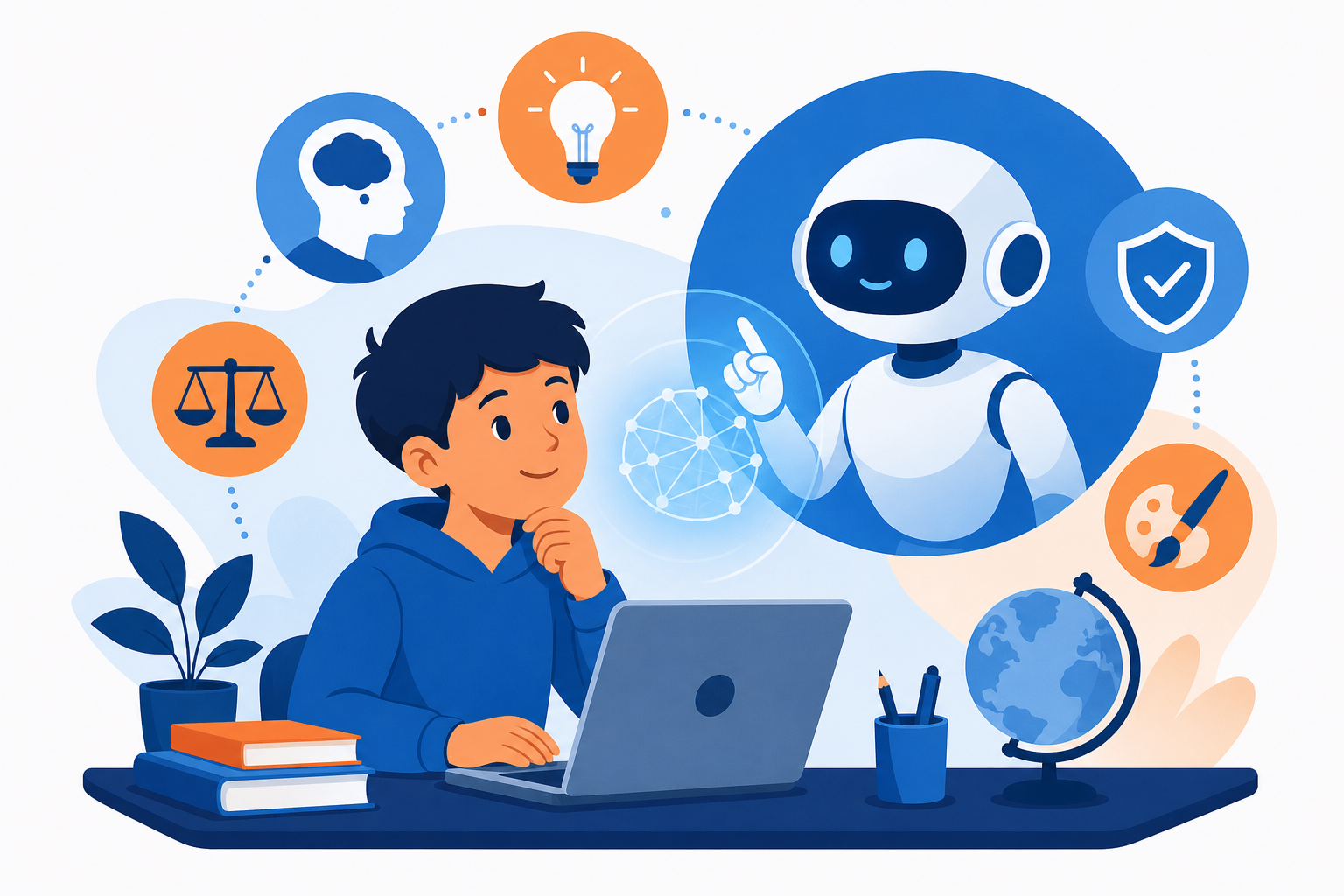
AI literacy is the ability to understand how artificial intelligence works, recognize its strengths and limitations, and use it thoughtfully and ethically. It does not require children to become programmers. Instead, it focuses on building the judgment to know when AI is helpful, when it might be wrong, and how to stay safe while using it.
Consider a simple example: a ten-year-old asks ChatGPT to explain the water cycle. The tool gives a clear, confident answer. But what if part of that answer is outdated or subtly incorrect? A child with strong AI literacy will pause and think, “Should I double-check this with my textbook or teacher?” A child without it may accept everything as absolute truth. That difference in mindset is exactly why AI education for students has become a priority in modern classrooms and homes.
How ChatGPT Actually Works (Explained Simply)
Before children use ChatGPT, they should understand a basic truth: it does not “know” things the way a person does. ChatGPT is a language model trained to predict the most likely next word based on enormous amounts of text. It is remarkably good at sounding human, but it does not have opinions, feelings, or real-world experience.
Here is an analogy kids can grasp: imagine a very well-read parrot that has memorized millions of books. It can repeat and remix ideas beautifully, but it does not truly understand them. Sometimes it makes things up with total confidence, a phenomenon experts call “hallucination.” Teaching this concept early helps children treat AI as a helpful assistant, not an all-knowing oracle.
The Core Rules for Children Using ChatGPT Safely
Safety is the foundation of any conversation about kids and AI. Here are practical guidelines that every student should learn and every adult should reinforce.
1. Never Share Personal Information
Children should understand that they must never type their full name, home address, school name, phone number, passwords, or photos into any AI tool. A good rule of thumb: if you would not shout it in a crowded park, do not type it into ChatGPT.
2. Always Verify Important Answers
Encourage kids to treat AI responses as a starting point, not the final word. If they are using ChatGPT for homework, health questions, or anything that matters, they should confirm the information with a trusted source such as a teacher, a parent, or a reliable book or website.
3. Recognize That AI Can Be Wrong or Biased
AI learns from human-created text, which means it can absorb human mistakes and unfair assumptions. A student might notice that an AI gives a one-sided answer about a historical event. This is a perfect teaching moment about bias and the importance of seeking multiple perspectives.
4. Use AI to Learn, Not to Cheat
There is a meaningful difference between asking ChatGPT to explain how to solve a fraction problem and asking it to do all the homework. The first builds understanding; the second replaces it. Help children see AI as a tutor that guides them, not a machine that does the thinking for them.
Turning ChatGPT Into a Learning Partner
When used well, AI can be an extraordinary educational tool. The key is teaching children to ask smart, specific questions and to stay engaged rather than passive.
Here are examples of productive prompts a student might use:
- “Explain photosynthesis like I’m eight years old.” This helps break complex ideas into simple language.
- “Give me three practice questions about the American Revolution, then check my answers.” This turns AI into an interactive study buddy.
- “I wrote this paragraph. Can you suggest ways to make it clearer without rewriting it for me?” This keeps the child in control of their own work.
Notice the pattern: the student is doing the thinking, and the AI is supporting that effort. This approach strengthens skills instead of weakening them.
The Emotional Side: AI Is Not a Friend
One overlooked aspect of AI literacy is helping children understand that a chatbot is not a real friend or a substitute for human connection. ChatGPT can be endlessly patient and always available, which can feel comforting. But it cannot truly care, and it should never replace conversations with parents, teachers, or peers about feelings and problems. Reminding kids of this distinction protects their emotional well-being.
What Parents and Teachers Can Do Today
Building AI literacy does not require a computer science degree. It requires curiosity, conversation, and consistency. Here are concrete steps adults can take right now.
Explore Together
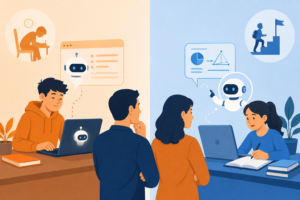
Sit beside your child the first few times they use ChatGPT. Ask questions out loud: “How do we know if this is accurate? What would you ask next?” Modeling curiosity teaches critical thinking more effectively than any lecture.
Set Clear Boundaries
Decide together which tasks are appropriate for AI and which are not. Many families create a simple agreement: AI can help with brainstorming and studying, but not with completing graded assignments alone.
Discuss Real Examples
When AI gets something wrong, point it out and talk about it. These moments are far more powerful than abstract warnings because they show, in real time, why healthy skepticism matters.
Keep the Conversation Ongoing
AI is evolving quickly, and so should your discussions. Check in regularly about what your child is doing with these tools and how they feel about them.
Preparing Kids for an AI-Powered Future
The children learning today will grow up in a world where artificial intelligence is woven into nearly every career and creative endeavor. Those who understand how to use it wisely, question it critically, and stay safe while doing so will have a tremendous advantage. AI literacy is quickly becoming as fundamental as reading and arithmetic.
The goal is not to make children fear technology or avoid it. The goal is to empower them to be thoughtful, confident, and responsible users. When a student can look at an AI-generated answer and think for themselves, “That is interesting, but let me verify it,” we have succeeded.
By teaching AI literacy for kids now, we are not just helping them use a chatbot. We are equipping them with the judgment, curiosity, and ethical grounding they will carry into every part of their lives. Start the conversation today, explore these tools together, and watch your young learner grow into a capable, discerning citizen of the digital age.