
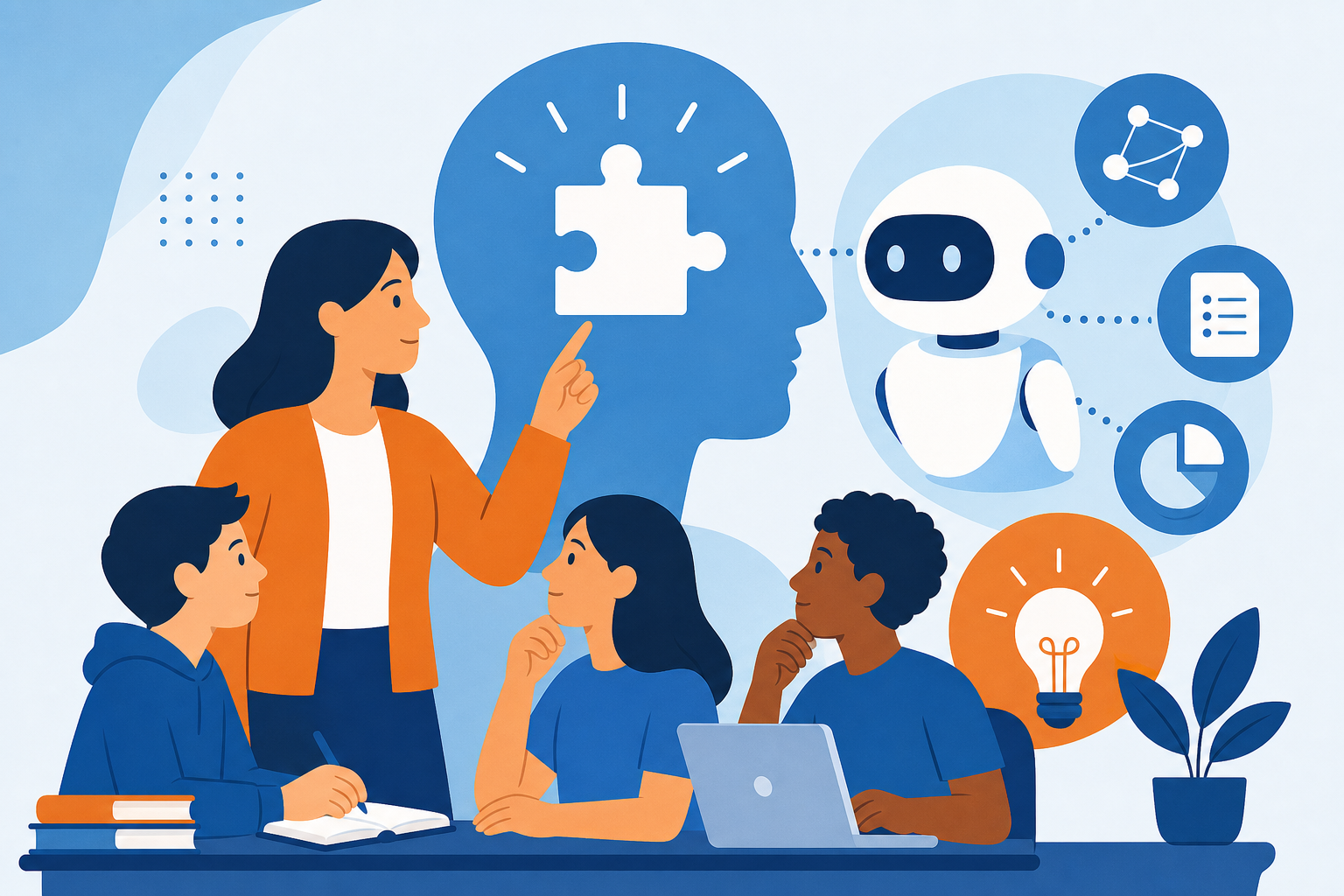
Artificial intelligence has moved from a distant idea to a daily reality in schools. Tools that draft lesson plans, generate quiz questions, and summarize dense readings are now a click away. For many teachers, this raises an uncomfortable question: if AI can produce answers so quickly, will students stop thinking for themselves? The good news is that AI in the classroom does not have to weaken critical thinking. Used well, it can actually strengthen it. The key is to treat AI as a thinking partner and a support tool, not as a replacement for the intellectual work that learning requires.
Why Critical Thinking Still Matters More Than Ever
Critical thinking is the ability to analyze information, weigh evidence, question assumptions, and reach reasoned conclusions. These skills are precisely what AI cannot do for a student. A language model can generate a fluent essay, but it cannot judge whether that essay reflects the student’s own understanding, values, or reasoning.
When we talk about critical thinking and AI, the goal is not to shield students from the technology. That approach fails because AI is already part of the world they will work in. Instead, the goal is to teach students to use AI while remaining the decision-makers. A student who can evaluate an AI-generated response, spot its errors, and improve on it is far better prepared than one who either avoids the tool entirely or accepts everything it produces without question.
Start by Modeling Good Use Yourself
Before asking students to use AI thoughtfully, teachers benefit from doing so themselves. When teachers using AI tools narrate their own process out loud, students learn what responsible use looks like.
For example, a science teacher might project a chatbot on the board and ask it to explain photosynthesis. Then, instead of accepting the answer, the teacher points out one part that is oversimplified and asks the class, “What did the tool leave out here?” This small act does two things at once: it shows AI as a starting point rather than a final authority, and it invites students into the habit of checking and correcting.
Modeling also means being honest about limitations. Tell students when an AI tool gave you a confident but wrong answer. These moments are some of the most valuable lessons you can offer, because they demonstrate that fluency is not the same as accuracy.
Practical Ways to Use AI That Deepen Thinking
The difference between AI that helps and AI that harms usually comes down to task design. Below are concrete strategies that keep students in the driver’s seat.
1. Use AI to Generate Drafts Students Must Critique
Ask an AI tool to write a short argument on a topic, then hand it to students with a clear job: find the weak reasoning, the missing evidence, and the unsupported claims. This flips the exercise from consuming to evaluating. A history class, for instance, might critique an AI-written summary of a historical event and compare it against primary sources. Students learn to fact-check, a skill that transfers far beyond the classroom.
2. Turn AI Into a Debate Opponent
Have students take a position and then prompt the AI to argue the opposite side. Students must respond to each counterargument with their own reasoning. This builds the ability to anticipate objections and defend a viewpoint, which is the heart of critical analysis.
3. Use AI for Feedback, Not Answers
Instead of asking a tool to write an essay, students can paste their own draft and ask for specific feedback: “Where is my argument unclear?” or “What questions would a skeptical reader ask?” The student still does the writing and the revising. The AI acts like a tireless tutor that prompts reflection.
4. Compare Multiple AI Responses
Ask the same question of an AI tool two or three times, or use two different tools. When students see that the answers differ, they confront a powerful truth: there is no single automatic correct answer. They must decide which response is stronger and why.
Design Assignments That AI Cannot Complete Alone
One of the most effective responses to AI is rethinking assessment. If an assignment can be finished entirely by a chatbot, it was probably testing recall rather than thinking. Consider redesigning tasks so that personal reasoning, local context, or process is central.
- Require reflection. Ask students to explain how they reached a conclusion, including what they changed their mind about along the way.
- Connect to lived experience. Assignments that ask students to relate a concept to their own community, family, or observations cannot be outsourced convincingly.
- Assess the process. Collect outlines, drafts, and notes, not just the final product. This makes thinking visible and rewards the work behind the result.
- Use oral defenses. A short conversation where students explain their work reveals genuine understanding far better than a polished document.
Teach Students to Question the Machine
Critical thinking about AI itself is a subject worth teaching directly. Students should understand, at an age-appropriate level, how these tools work and where they fall short.
Explain that AI models predict likely text based on patterns in data, which means they can produce information that sounds authoritative but is simply wrong. Introduce the idea of bias: because these systems learn from human-created content, they can repeat stereotypes or reflect gaps in that data. Encourage a simple habit built on three questions students can ask about any AI output: Is this accurate? How could I verify it? What might be missing or slanted?
When students internalize these questions, they carry a form of intellectual self-defense that serves them across every subject and well into adulthood.
Set Clear Boundaries and Expectations
Students thrive when the rules are explicit. Rather than a vague ban or an anything-goes attitude, create a clear policy for your classroom. Specify which tasks welcome AI assistance, which require independent work, and how students should disclose their use of these tools.
A transparency norm works especially well. Ask students to note when and how they used AI, much like citing a source. This removes the temptation to hide it and reframes the tool as one resource among many, used openly and responsibly.
Keep the Human Element at the Center
No tool replaces the relationship between a teacher and a student. AI can save you time on routine tasks, freeing hours for the work only you can do: noticing when a student is struggling, sparking curiosity, and guiding a discussion where real understanding grows. Let the technology handle the repetitive parts so you can invest more in mentoring and connection.
The teachers who succeed with AI will not be those who resist it entirely or surrender to it completely. They will be the ones who ask, at every step, whether a given use makes their students think more or think less. Keep that question at the front of your planning, and AI becomes what it should be: a tool that amplifies human intelligence rather than a shortcut that dulls it.
Moving Forward with Confidence
You do not need to master every new tool to use AI well. Start small: pick one strategy from this article, try it next week, and reflect on what happened to your students’ thinking. Adjust from there. With thoughtful design and clear expectations, you can bring AI into your classroom in a way that protects and even sharpens the critical thinking your students will need for the rest of their lives.