
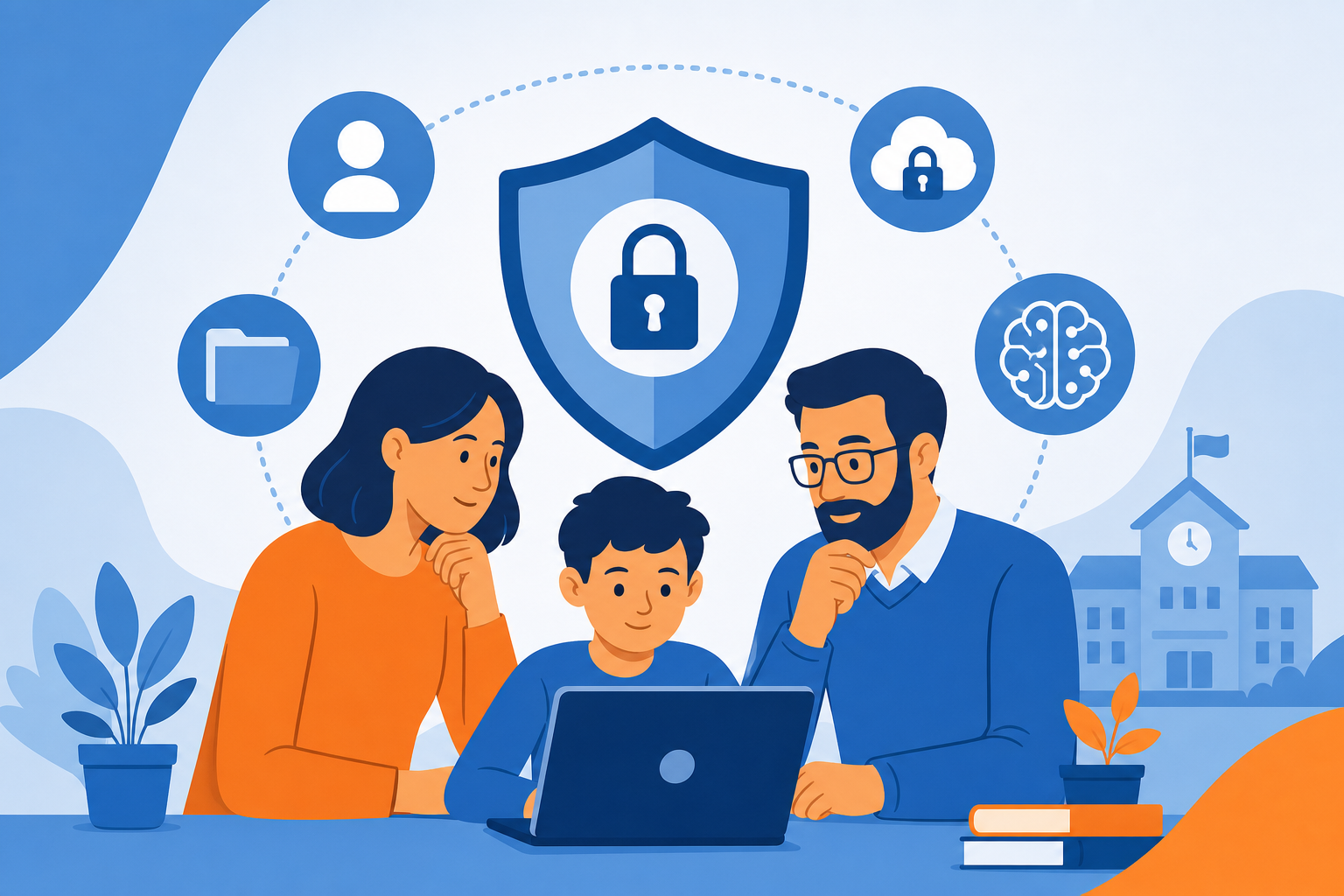
Artificial intelligence has quietly become part of everyday classroom life. From adaptive math platforms that adjust to each learner’s pace to writing assistants that give instant feedback, AI tools in schools promise more personalized and efficient learning. But behind every recommendation and every automated grade lies a stream of information about your child. Understanding student data privacy is no longer optional for parents and educators—it is a core responsibility.
This guide explains what data these tools collect, the real risks involved, and the practical steps you can take to protect students while still enjoying the benefits of modern technology.
Why Student Data Privacy Matters More Than Ever
Children generate an enormous digital footprint before they ever open a bank account or sign an employment contract. A single AI-powered learning app might record a student’s name, age, location, academic performance, behavioral patterns, typing speed, and even how long they hesitate before answering a question.
This information is valuable. It can be used to improve products, but it can also be sold to third parties, exposed in a data breach, or used to build detailed profiles that follow a child for years. Because students cannot meaningfully consent to how their data is used, the burden falls on the adults around them.
Strong educational data protection is not about rejecting technology. It is about making sure that the tools we welcome into classrooms treat sensitive information with the care it deserves.
What Data Do AI Tools Actually Collect?
AI systems learn from data, so the more they gather, the better they perform—at least in theory. Common categories of collected information include:
- Personal identifiers: full names, email addresses, dates of birth, and sometimes photographs.
- Academic records: grades, test scores, reading levels, and progress over time.
- Behavioral data: how long a student spends on a task, which questions they skip, and their patterns of engagement.
- Device and location data: IP addresses, browser types, and approximate geographic location.
- Biometric or voice data: some tools record speech for language learning or use facial recognition for attendance.
For example, a popular reading app might track that a nine-year-old struggles with certain vocabulary. That single detail seems harmless, but combined with thousands of other data points, it becomes a rich profile that could be misused if it falls into the wrong hands.
The Real Risks Behind Convenient Tools
Convenience often hides risk. Here are the concerns educators and parents should keep front of mind.
Data Breaches
Schools and educational technology companies are frequent targets for cyberattacks. A breach can expose the records of thousands of students at once, and children have no way to change their date of birth or academic history the way an adult might reset a password.
Commercial Exploitation
Some free tools generate revenue by sharing or selling user data to advertisers and data brokers. When a service costs nothing, student information is often the product being monetized.
Algorithmic Bias
AI systems can reinforce unfair patterns. If an algorithm labels a student as “low performing” based on incomplete data, that label may influence teachers’ expectations and limit opportunities for years.
Lack of Transparency
Many AI tools operate as black boxes. Neither teachers nor parents can easily see how decisions are made or where data travels once it leaves the classroom.
Questions Every School Should Ask Before Adopting an AI Tool
Before a district or teacher signs up for a new platform, a short checklist can prevent big problems later. Ask the vendor:
- What specific data does the tool collect, and why is each category necessary?
- Where is the data stored, and is it encrypted both in transit and at rest?
- Is student data ever sold, shared, or used to train commercial AI models?
- How long is data retained, and can it be permanently deleted on request?
- Does the tool comply with relevant student privacy laws in your region?
- Who has access to the data, and what happens if the company is acquired or shuts down?
If a provider cannot answer these questions clearly, treat that as a warning sign rather than a minor inconvenience.
Practical Steps for Educators
Teachers and administrators are often the first line of defense. Here is how to strengthen educational data protection in your school.
Vet Tools Before Classroom Use
Avoid installing apps on a whim. Establish an approval process so that every tool is reviewed for privacy and security before students use it. Maintain a shared list of approved platforms so teachers do not each adopt different, unvetted services.
Practice Data Minimization
Only collect and share what is genuinely necessary. If a math app does not need a student’s full name to function, use initials or an assigned ID instead.
Read the Privacy Policy—Really
Yes, they are long. Focus on the sections covering data sharing, retention, and third-party access. Free tools deserve extra scrutiny.
Teach Digital Citizenship
Help students understand that their data has value. A short lesson on how AI collects information turns learners into active participants in their own privacy rather than passive subjects.
Practical Steps for Parents
Parents have more power than they often realize. Consider these actions.
Ask Your School Directly
Request a list of the AI and digital tools your child uses. A simple email to a teacher or administrator asking “What platforms does my child use, and how is their data protected?” signals that families are paying attention.
Review Consent Forms Carefully
Those forms sent home at the start of the year often grant broad permissions. Read them, ask questions, and remember that you can usually opt out of specific tools.
Model Good Habits at Home
Talk with your children about not oversharing personal details online. Set up devices with privacy-focused settings and explain why you make those choices.
Stay Informed
Privacy laws and technology evolve quickly. Following trustworthy sources on student data privacy helps you spot new risks and advocate effectively.
Building a Culture of Privacy
Protecting student information is not a one-time task but an ongoing commitment shared by everyone in the school community. The most effective schools treat privacy as a value woven into daily decisions, not a box to check when a lawyer asks.
When parents, teachers, and administrators work together—asking hard questions, choosing tools thoughtfully, and teaching students to value their own data—AI becomes a genuine asset rather than a hidden liability.
Moving Forward With Confidence
AI tools are here to stay, and used wisely they can transform education for the better. The goal is not to fear technology but to demand accountability from the companies that build it and to make informed choices as a community.
Start small: pick one tool your child or classroom uses, review its privacy policy, and ask one meaningful question this week. Every deliberate step you take builds a safer digital environment where students can learn, grow, and explore without sacrificing their privacy. Informed adults create protected learners, and that protection is one of the most valuable lessons we can offer the next generation.


