Best Online STEM Courses for Students and Young Innovators
The way students learn is changing quickly. Today, education is no longer limited to a traditional classroom or fixed schedule. More families, schools, and organizations are looking for flexible learning experiences that still build strong academic and practical skills. That is one reason online STEM education has become so valuable.
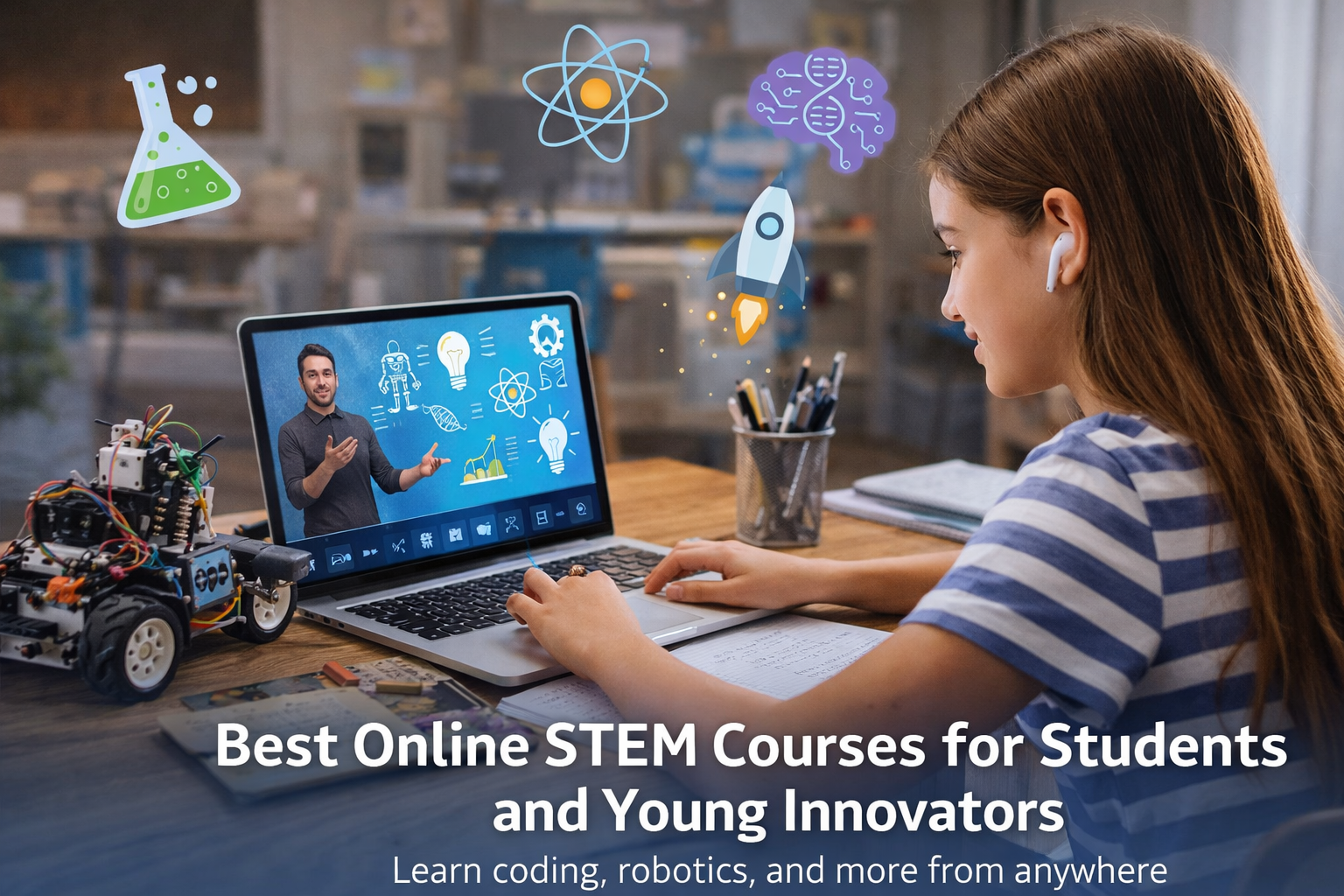
The best online STEM courses for students do much more than deliver information through a screen. They help learners explore science, technology, engineering, and mathematics through interactive lessons, real-world challenges, creative projects, and guided practice. When designed well, these courses can inspire curiosity, strengthen problem-solving, and prepare students for a future shaped by innovation.
For students who are naturally curious, creative, or interested in building things, online STEM learning can open exciting new opportunities. It can also support students who need a more flexible environment to explore new subjects at their own pace. The key is choosing courses that are engaging, practical, and designed to help students apply what they learn in meaningful ways.
Why online STEM learning matters
Online STEM education offers something many students need: access. It makes learning available beyond the limits of time, geography, and classroom schedules. A student can explore programming, robotics, engineering design, or sustainability from home, from school, or from anywhere with internet access.
This flexibility is especially valuable because students learn in different ways. Some move quickly and want to go deeper into a subject. Others need more time, repetition, or the ability to review lessons at their own pace. Online STEM courses can support both kinds of learners when they are well structured.
More importantly, online learning can help students develop independent learning habits. They learn how to manage time, follow instructions, explore resources, complete projects, and stay engaged in a digital learning environment. These are all useful skills for future study and work.
What makes the best online STEM courses for students?
Not all online courses are equally effective. The best online STEM courses for students share a few important qualities that make learning more valuable, engaging, and practical.
1. They are interactive, not passive
A strong online STEM course should invite students to participate actively. Watching videos can be useful, but real learning happens when students do something with the information. The best programs include quizzes, challenges, guided tasks, experiments, design activities, or project-based assignments.
Students should feel like they are exploring, testing, and creating—not just receiving content. Interactivity helps them stay focused and makes learning more memorable.
2. They connect learning to real-world applications
One of the biggest strengths of STEM education is its relevance. Students are more likely to stay motivated when they understand how a concept applies to the real world. Great online STEM courses do not teach science, coding, or engineering as isolated topics. They show students how these ideas connect to real problems and useful solutions.
For example, a course might ask students to design a simple prototype, build a sustainability project, improve a system, or create a basic program. These tasks help learners understand that STEM is not just academic. It is a way of thinking, building, and solving.
3. They are age-appropriate and skill-based
The best online STEM courses for students should match the learner’s age, stage, and experience level. A younger student may need simple instructions, highly visual content, and short lessons. An older student may be ready for more advanced projects, deeper concepts, and independent tasks.
A good course does not overwhelm students or make them feel lost. Instead, it builds confidence step by step. It introduces concepts clearly, provides guidance, and allows learners to grow through practice.
This is especially important for students who are just beginning to explore coding, engineering, or innovation. A positive early experience can shape how they feel about STEM for years to come.
4. They include hands-on or project-based learning
Online learning should still feel active. The strongest STEM courses combine digital instruction with hands-on experiences whenever possible. Students may sketch an idea, build a model, test a design, solve a challenge, or present a final project.
Project-based learning helps students connect knowledge with action. Instead of simply learning about a concept, they use it. That process strengthens understanding and encourages deeper thinking.
It also helps students build soft skills such as persistence, communication, organization, and creativity. These are essential qualities for young innovators.
5. They promote creativity, not just technical knowledge
A common mistake is assuming STEM is only about logic or technical ability. In reality, creativity is a major part of successful STEM learning. Students need to imagine solutions, improve ideas, and think in original ways.
The best online STEM courses encourage that creativity. They allow space for experimentation and innovation. They help students ask questions such as: How could this work better? What problem can I solve? What can I create with what I know?
That creative freedom can make a huge difference in student motivation and confidence.
6. They help students develop future-ready skills
Online STEM learning is not only about preparing students for academic success. It is also about helping them develop the skills they will need in the future. These include critical thinking, problem-solving, communication, digital confidence, adaptability, and collaboration.
Even when students are learning independently online, a good course can still strengthen these skills through structured activities, reflection, project work, and feedback. These are the skills that support success across many careers—not only in technical fields, but also in business, design, education, healthcare, and entrepreneurship.
How to choose the right online STEM course
For parents, schools, or educational organizations, choosing the right course starts with a simple question: what do we want students to gain from this experience?
Some programs focus more on coding. Others emphasize robotics, engineering design, sustainability, or innovation. The best choice depends on the student’s age, interests, and learning goals.
When evaluating a course, it helps to look for these features:
- Clear learning outcomes
- Interactive lessons
- Hands-on or project-based activities
- Age-appropriate structure
- Practical, real-world applications
- Opportunities for creativity and problem-solving
- A supportive learning experience that builds confidence
A course should not only teach content. It should help students become more curious, capable, and motivated to keep learning.
Why this matters for young innovators
Students today are growing up in a world that rewards initiative, creativity, and adaptability. Young innovators need opportunities to explore ideas, test solutions, and develop confidence in their own thinking. Online STEM courses can support that development in a flexible and meaningful way.
For some students, an online STEM course may be their first introduction to coding, engineering, or sustainable innovation. For others, it may be the next step that helps them go further in an area they already enjoy. In either case, high-quality online learning can help students discover what they are capable of.
It can also show them that learning is not only about consuming information. It is about creating something, solving something, and improving something.
How this aligns with SkillUp
This topic fits naturally with SkillUp’s educational mission. The site already presents student programs for ages 10 to 18 that include engineering foundations, programming, renewable energy, project management, innovation, and final presentations. It also positions its e-learning platform as an upcoming area of growth. That makes this article strategically valuable because it supports current topical authority while also building a strong SEO bridge toward future online course offerings.
Conclusion
The best online STEM courses for students are not simply digital lessons. They are learning experiences that help young people explore ideas, solve problems, build confidence, and prepare for the future. When a course is interactive, practical, age-appropriate, and creative, it can have a lasting impact on how students learn and grow.
For parents, schools, and educational organizations, choosing the right online STEM course is an opportunity to invest in more than academic knowledge. It is a way to help students become curious thinkers, creative problem-solvers, and future-ready innovators.
As online learning continues to grow, strong STEM education will become even more important. And for students who are ready to explore, create, and lead, the right course can be the beginning of something powerful.
FAQ
What are the best online STEM courses for students?
The best online STEM courses for students are programs that combine interactive learning, real-world applications, project-based activities, and age-appropriate instruction to build problem-solving and creativity.
What should parents look for in an online STEM course?
Parents should look for clear learning goals, interactive content, hands-on projects, practical applications, and a structure that matches the student’s age and skill level.
Are online STEM courses good for beginners?
Yes. Many online STEM courses are excellent for beginners when they introduce concepts step by step and create a supportive learning environment that builds confidence.
Why are online STEM courses important?
Online STEM courses are important because they give students flexible access to valuable skills such as coding, engineering thinking, creativity, and problem-solving in a format that can fit different learning needs.